
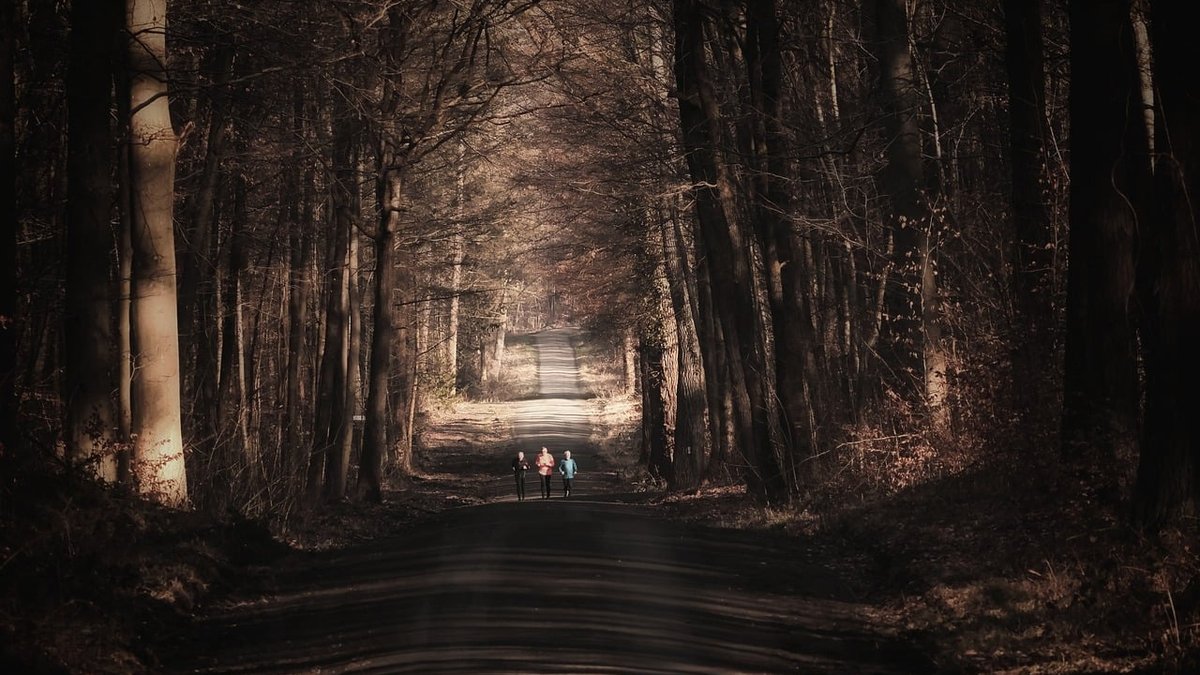
There is a particular pleasure in walking through a British woodland and being able to name the trees around you. It turns a pleasant stroll into a conversation with the landscape. You do not need to be a botanist. You need three clues: leaves, bark and buds. Leaves are easiest in spring and summer. Bark is visible all year. Buds are the secret weapon in winter, when everything else has vanished. Start with the four common trees below: oak, ash, beech and hazel. Each has a distinct personality, and once you learn their signatures, you will spot them everywhere from ancient woodlands to coastal hedgerows.
Oak is the tree most people want to identify first, and it rewards close looking. The English or pedunculate oak is the classic woodland tree. Its leaves have rounded lobes with wavy edges – no sharp points. The bark on a mature oak is deeply fissured, like a relief map of ridges and valleys. In winter, look for buds clustered at the ends of twigs. They are reddish-brown, egg-shaped and often sit in groups, which is unusual among our common trees. Oak branches alternate rather than growing opposite each other. If you find acorns in autumn, you have your confirmation.
Ash is tall and elegant, with grey bark that becomes ridged in a diamond pattern on older trees. Its leaves are pinnate – a central stem with paired leaflets, usually seven to thirteen. The leaflets have serrated edges. The easiest winter clue is the buds: they are black, velvety and sit opposite each other on the twig. This opposite arrangement is rare; most trees alternate. Ash keys, the winged seeds, hang in bunches in autumn. Note that many ash trees are currently affected by a disease, but healthy specimens still thrive in many woodlands. Focus on the buds – once seen, never forgotten.
Beech is a tree of smooth, silvery-grey bark, often with faint horizontal lines. Its leaves are oval, with a smooth, slightly wavy edge and silky hairs when young. In autumn they turn a rich copper and often stay on the tree into winter. The buds are long, slender and sharp, like small cigars, set alternately along the twig. Beech nuts sit in prickly cases and are a favourite of squirrels and birds. You will often find beech on chalky soils, forming dense, shady woodlands with little undergrowth.
Hazel is a small tree or large shrub, often coppiced to produce many slender stems from the base. Its leaves are round, with a pointed tip and serrated edges, soft and hairy to the touch. The bark is smooth and coppery brown, sometimes peeling in strips. Buds are plump, greenish-brown and alternate. In late winter, look for long yellow catkins – the lambs’ tails – and tiny red female flowers. In autumn, hazelnuts or cob nuts appear in leafy husks. Hazel is a great beginner tree because it is common in hedgerows, woodland edges and even coastal copses.
The best way to learn is to pick one tree per walk and give it your full attention. Carry a small notebook or take photos on your phone. Visit the same tree in different seasons: notice the buds in January, the leaves in June, the bark in November. Compare oak and ash directly – oak buds are clustered and reddish; ash buds are black and opposite. A simple pocket guide can help, but your own observations will stick fastest.
Try this on your next woodland walk. Choose a single oak or hazel and spend five minutes just looking. Trace the shape of a leaf. Feel the bark. Find one bud and describe it to yourself. You will be surprised how quickly these details become familiar. And whether you are inland or on a blustery coastal path, these trees are part of the same living landscape. Nordic-inspired outdoor living is about slowing down and paying attention. Tree identification is a perfect way to do exactly that – one leaf, one bud, one tree at a time.

Hi, my name is Anthony kuber. I am artist and fashion designer.
I love to travel and writing blogging.
Your email address will not be published. Required fields are marked *
Software Developer & Writer
Hey, I'm Diva, a developer and writer blending code and creativity. I'm driven by a deep curiosity and a relentless pursuit of excellence. Join me as I craft digital solutions and captivating stories.


